PolasourcingGet Quote
PRODUCT RESEARCH
Many new US‑based importers make one costly mistake: asking their China sourcing partner to “find me a high‑profit product with low MOQ”. But sourcing agents cannot predict what will sell well on the US market. Before reaching out to factories or buying agents, you need to complete solid local‑side market validation. This article walks you through a practical 7‑step research workflow, explains why viral trending items often trap new sellers, and shows how to refine broad categories into concrete, source‑ready product ideas.
Key Takeaways
- Never rely on your sourcing agent to pick winning products for you. Strong consumer demand alone does not guarantee profitability; fierce competition and thin margins can quickly erase your returns.
- Finish seven core market validation tasks before submitting any factory inquiry: define retail price range, calculate full landed cost, set minimum net margin targets, assess trends & seasonality, build target‑customer profiles, run competitor benchmarking, and lock in one specific product item.
- High‑demand goods such as wireless earbuds look appealing, yet dominant brand players and sky‑high advertising spend create huge entry barriers for first‑time sellers.
- Avoid overly‑broad search terms like “home goods” or “pet supplies”. Narrow down to one concrete product variant (e.g., BPA‑free silicone slow‑feed bowl for medium‑sized dogs) before requesting quotes and MOQ information.
- Aim for 30% or higher net margin after covering landed expenses, platform charges and ad spend. Any expected net margin below 15% puts you into a commodity trap, vulnerable to freight price swings and price wars. Use a landed‑cost calculator before paying any supplier deposit.
What This Article Covers
Every week, we receive messages from aspiring Amazon FBA and ecommerce sellers asking us to recommend profitable items. While Chinese suppliers can manufacture almost any item, and sourcing teams can share factory pricing and minimum‑order rules, we cannot decide which product matches your budget, audience and business goals.
Profitability is driven by US‑market realities: acceptable retail price points, competitor landscape, customer acquisition costs, and your available startup capital. If you skip market research and jump straight into sourcing, you risk large batches of inventory you cannot move. This guide serves as essential pre‑work for first‑time China importers and FBA product hunting.
Why “Find Me a Profitable Product” Is The Wrong Starting Point
Think about walking into a restaurant and saying “make me something tasty”. The chef can prepare delicious food, yet the final dish may not fit your budget, taste preference or dietary limits. Product sourcing works exactly the same way.
Sourcing professionals can locate manufacturers for nearly any physical product. But “profitable” is an end‑result determined by overseas market conditions, not purely factory costs. If you simply accept whatever product is popular in China manufacturing circles, three bad outcomes frequently appear:
- Overwhelming competition: Viral hot‑sale items already have well‑established sellers with thousands of reviews and large paid‑ad budgets. New entrants struggle to capture sales.
- Disappearing profit margins: Low EXW factory prices seem attractive, but once you add ocean/air freight, import duties, Amazon prep fees, returns and advertising, your total landed cost can multiply.
- Zero differentiation: If dozens of merchants sell identical goods from identical factories, price becomes your only competitive tool, triggering destructive price‑cut races.
Your opening question should not be “what should I sell?”. Instead, ask: *“Given my capital budget and current US market environment, what product can I operate profitably?”*. Answering this requires market research, not third‑party product suggestions.
The 7‑Step Market Validation Checklist
Complete these seven steps before contacting any sourcing service or factory. This filtering process separates promising opportunities from blind, money‑losing gambles.
- Set your target retail price window
Select a price bracket you can realistically defend. For beginner sellers, $15‑$35 is generally ideal. Your price range shapes which categories are viable and how much you can afford for customer acquisition.
- Calculate complete landed cost
Sum unit EXW factory price, domestic China logistics, international DDP freight, import duty, insurance, FBA/prep work and marketplace seller fees. Your landed total — not the factory quote — ultimately defines your profit room.
- Lock in minimum required net margin
Target minimum 30% net margin after all expenses. Results falling below 15% leave no safety buffer when freight rates rise or competitors slash prices.
- Analyze category trends and seasonal cycles
Use Google Trends, Amazon BSR historical data and Keepa to verify demand stays stable or grows. Avoid products built only on short‑term seasonal spikes.
- Build your target‑customer profile
Document buyer age range, household income, purchase scenarios and preferred shopping channels. Without a clear picture of who you are selling to, you cannot build workable marketing plans.
- Carry out in‑depth competitor analysis
Study the top‑10 listings in your niche: selling price, total review volume, star ratings, listing quality and brand influence. If top three players capture more than 60% market share and each holds over 1000 reviews, market entry barriers are too steep for new sellers.
- Narrow down to one exact product variant
Move from broad category names to one well‑defined SKU. Only at this stage can sourcing partners accurately source factories, confirm MOQs and provide formal quotations.
Market Research Scorecard
Evaluate every candidate product against these benchmarks. Do not request factory samples until your item passes all criteria.
表格
| Check Item | Pass Threshold | Core Reason |
|---|---|---|
| Retail selling price | $15‑$35 for new sellers | Under $15 leaves little budget for ads; above $35 demands higher startup capital & brand trust |
| Landed cost / retail price ratio | Below 45% of final selling price | Creates room for platform fees, marketing, return losses and net profit |
| Expected net margin | 30%+ | Protection against freight volatility, PPC spending and product returns |
| Two‑year Google Trends performance | Flat or upward‑moving search interest | Filters out fast‑collapsing fads |
| Seasonality performance | Marketable for minimum 8 months per year | Prevent large inventories sitting unsold for half of each calendar year |
| Top‑3 sellers combined market share | Under 50% | Avoid brand‑locked categories controlled by a small number of dominant players |
| Average review count among top‑10 listings | Fewer than 500 reviews | Lower barrier for new listings to gain traction |
| MOQ vs startup budget | MOQ value ≤40% of total startup funds | Prevent tying up most working capital in a single production batch |
Why Viral Trendy Products Often Fail: Wireless Earbuds Example
Wireless earbuds serve as a textbook warning example. Consumer demand inside the US market is massive, and Chinese factories can produce units at low factory prices. Dig deeper and you will spot major risks for new merchants:
- Strong brand monopoly: Apple, Samsung, Bose and Anker dominate most sales and review volume. Fresh sellers cannot compete on brand credibility.
- Extreme advertising costs: Keyword click costs for earbud‑related search terms rank among the highest within consumer electronics. Your ad spend may exceed per‑unit profit.
- High return & warranty pressure: Electronic goods generate elevated return rates, while shoppers commonly expect after‑sales warranty support. Paper‑calculated margins quickly disappear after return deductions.
- Continuous price compression: Countless no‑brand merchants sell hardware using identical chip sets; price becomes the only competitive lever, and another seller will always undercut you.
The lesson: High demand alone is never sufficient. You need both steady demand AND a workable competitive edge — niche positioning, upgraded features, custom bundles or unique price positioning others have not filled. Wireless earbuds have huge demand yet offer almost no practical advantage for brand‑new market entrants.
Practical Validation Example: Silicone Slow‑Feeder Dog Bowl
We test this finished specific product against our seven‑step checklist:
- Retail price range: Comparable items sell $14.99‑$24.99; target selling price set at $19.99. ✅ Pass
- Landed cost calculation: EXW ~$2.20, DDP freight ~$0.90, import duty (HS 3924, ~3%) ~$0.09, Amazon prep cost ~$0.20. Total landed ~$3.39 (17% of retail price). ✅ Pass
- Profit margin: After platform fees (~15%) and 20% ad budget allocation, net profit reaches roughly $9‑$10 for each unit (45‑50% net margin). ✅ Pass
- Market trend: “Slow feeder dog bowl” search volume holds steady with mild growth over three‑year Google Trends data. ✅ Pass
- Seasonality: Year‑round consumption without sharp seasonal drops. ✅ Pass
- Competitor landscape: Top‑10 listings average ~280 reviews; top‑3 players hold approximately 35% total sales. No single brand fully controls this keyword space. ✅ Pass
- MOQ against budget: Yiwu / 1688 factories offer MOQ of 500 units at ~$2.20 each; goods value plus shipping sits comfortably within typical first‑order capital limits. ✅ Pass
- *Final decision: Proceed to source.**
Differentiation opportunities: food‑grade silicone material, formal BPA‑free certification, reinforced suction base for medium‑breed dogs, custom brand colours and branded packaging. Next steps: place sample‑order requests, verify certification documents and launch a low‑MOQ initial production run.
Red Flags: Product Types You Should Walk Away From
- Brand‑saturated categories: Wireless earbuds, basic phone cases, entry‑level Bluetooth speakers. Dominant existing sellers create insurmountable obstacles for newcomers.
- Short‑lived viral fads: Items showing explosive search growth for several weeks followed by total collapse. Always analyse 2‑3‑year trend datasets, not only 2‑month snapshots.
- Projected net margin below 15%: Freight rate increases, duty adjustments or ad competition will wipe out your profit buffer. Re‑run your landed‑cost calculation carefully.
- Oversized & heavy merchandise: Per‑unit freight expense eats most profit unless your retail price point is very high.
- High‑compliance product groups: Children’s goods, food‑contact articles, electronics and battery‑powered items demand certification testing and documentation. Factor testing costs and extended lead‑times into your budget, or avoid these categories for your first import project.
- IP‑protected designs: Products covered by appearance or functional patents risk marketplace takedown notices. Register custom private‑label designs if you intend to copy existing popular shapes.
What Your Sourcing Partner Can & Cannot Deliver
Once you finish market research and settle on one specific product, a competent China sourcing partner delivers massive value. Below is a clear division of responsibilities:
表格
| Tasks Sourcing Team CAN Complete | Tasks Sourcing Team CANNOT Complete |
|---|---|
| Share real‑world factory trends and viable low‑MOQ options | Decide your product selection or guarantee US‑market sales results |
| Locate and perform background verification for factories matching your exact product specs | Predict what price US consumers will accept (this is your market‑research job) |
| Negotiate unit pricing, MOQ requirements and production lead‑times | Absorb your advertising, return or platform‑related business costs |
| Organize AQL 2.5 pre‑shipment quality inspections before goods leave China | Turn an inherently uncompetitive product into a money‑maker |
| Arrange door‑to‑door DDP shipping solutions | Define your target‑customer profile or build your marketing strategy |
The higher quality your pre‑sourcing research output, the more precise and efficient your sourcing partner’s work will be. Provide them a concrete product definition, target retail price and MOQ budget, and they will turn your idea into sampled, inspected and shipped inventory.
How Polasourcing Translates Your Market Research Into Shipped Inventory
- Landed‑cost modelling: Real EXW factory pricing, DDP freight quotes and duty calculation for every unit so your profit forecasts align with real‑world import expenses.
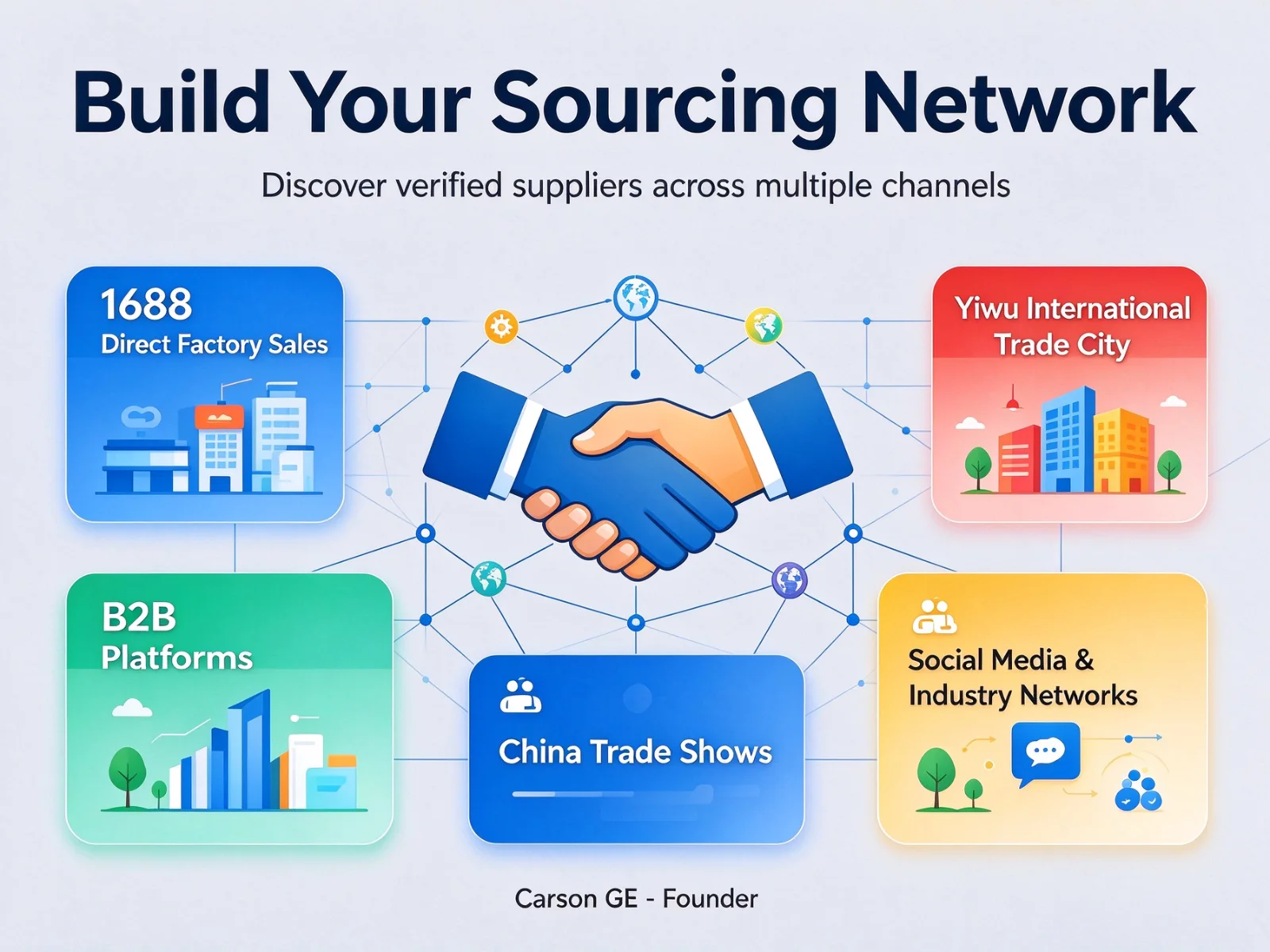
- Targeted factory sourcing: Screen and validate suppliers from Alibaba, 1688 and Yiwu market that match your first‑order MOQ requirements.
- Custom private‑label services: Custom colours, logo printing and bespoke packaging for OEM / private‑label projects.
- Compliance support: Check required product certifications and validate test documentation as needed for US import rules.
- Quality assurance: AQL 2.5 pre‑shipment inspection service before cargo departs Chinese ports.
- Full‑service DDP shipping: All‑in door‑to‑door transport including duty clearance, eliminating unexpected hidden fees.
Frequently Asked Questions
1. Can my China sourcing agent pick winning products for US sales?
Sourcing agents can tell you which goods are currently manufacturable at low MOQ inside Chinese factories. However, they should never select products for you. Selling decisions rely on US‑side market metrics: retail pricing, competitor intensity, ad costs, seasonal patterns and your own available capital — all of which you must validate independently. Reliable sourcing partners help you source items you have already researched, rather than guessing market winners for you.
2. Why are wireless earbuds a poor choice for brand‑new US sellers?
Wireless earbuds enjoy strong overall US consumer demand. Yet well‑established large brands dominate market share while competing merchants pour large sums into paid advertising. New sellers face steep customer‑acquisition costs, compressed profit margins and a long uphill battle building review volume. Strong demand alone never guarantees success; competitive barriers matter more.
3. What profit margin target should I set for China‑imported US‑market goods?
Aim for minimum 30% net margin after landed costs (EXW + DDP freight + duty + prep work), marketplace fees and marketing spend. Under 30% leaves no safety margin for PPC ads, customer returns and freight rate volatility. Anything below 15% puts you in commodity territory. Always run landed‑cost modelling before sending deposits to factories.
4. Is it sufficient to state “I want to sell pet products”?
No. “Pet products” is far too broad. Everyone recognises pet‑supply market potential in the US, but you need to narrow your scope down to one concrete product variant, for example a BPA‑free silicone slow‑feed bowl for medium‑sized dogs. Only then you can complete pricing research, competitor analysis and assess sourcing feasibility. Broad category names hide critical details that determine profit or loss.
5. How do I confirm genuine demand instead of temporary trend spikes?
Pull 2‑3‑year historical search data from Google Trends. Use Keepa for Amazon BSR and price history; leverage Helium 10 or Jungle Scout for review‑velocity insights. Prioritize products showing steady or rising demand across 12+ months. Avoid items with brief explosive search spikes followed by rapid decline.
6. What MOQ makes sense for my first China import order?
For initial production runs, select an MOQ volume you expect to sell through within 60‑90 days. Typical ranges sit between 300‑1000 units depending on product category. Never commit to an MOQ value consuming over 40% of your startup working capital. Many Yiwu and 1688‑based manufacturers support flexible low‑MOQ trial batches for market validation.
Common Pitfalls To Avoid
- Accepting flat‑rate DDP quotes without itemized breakdowns: Trustworthy DDP quotations separate freight, duty, VAT, customs clearance and last‑mile delivery charges. Simple per‑kilogram lump‑sum pricing conceals extra costs that surface later as surprise invoices or low‑quality logistics service.
- Selecting CIF shipping terms: Under CIF contracts, your supplier selects the freight carrier and may inflate shipping costs. Prefer FOB (you control forwarder selection) or fully‑inclusive DDP. Only accept CIF if no other alternative exists.
- Missing lead‑time buffers for Amazon FBA restocks: Sea freight transit from China runs 25‑40 days, plus another 5‑7 days for FBA receiving workflows. Place your order 45‑60 days ahead of when you need stock inside Amazon warehouses, not 30 days. Running out of inventory directly damages your Amazon search ranking.
- Ignoring ISPM‑15 requirements for wooden pallets: Both US and EU customs enforce heat‑treated IPPC‑stamped pallets. Missing stamps lead to container detention, expensive fumigation fees ($400‑600) and multi‑day shipment delays.
- Skipping cargo insurance: Freight forwarders carry limited legal liability, normally capped around $2 per kilogram. For higher‑value shipments, purchase separate all‑risk cargo insurance (costing roughly 0.3‑0.5% of total cargo value). A small premium protects you against thousands of dollars of potential losses.
Conclusion
The most frequent error made by new US importers is delegating product‑selection work to their overseas sourcing partner. Chinese factories can manufacture goods cheaply, yet low production cost does not automatically translate to profitable retail sales.
Before sending your first supplier inquiry, finish the seven‑step market‑research workflow: define your retail price bracket, calculate full landed costs, lock in your minimum net‑margin target, verify long‑term demand trends, evaluate seasonal shifts, build your buyer persona, analyse competing listings, and narrow your idea down to one specific product SKU. This is the point when your sourcing partner can create real value for your business.
Hyped trending goods such as wireless earbuds appear tempting but trap beginners with high ad spending and brand‑controlled marketplaces. Winning opportunities exist where sustainable consumer demand overlaps with a competitive advantage you can realistically deliver.
Once you finish your market validation work, get in touch for your free sourcing quote from Polasourcing. We will build your landed‑cost model, source suitable factories matching your MOQ targets, and run AQL 2.5 quality inspection before your shipment departs China.
- *Carson GE**
- *China Sourcing Expert · Polasourcing**
Carson GE is founder of Polasourcing, a Yiwu‑based China sourcing agency supporting Amazon FBA sellers, offline retailers and wholesale importers. With years of hands‑on industry experience, our team helps overseas buyers locate verified manufacturers, enforce product quality standards and arrange smooth end‑to‑end shipping out of Yiwu, home to the world’s largest small‑commodity marketplace.