PolasourcingGet Quote
Published: 2026‑08‑13 | Polasourcing Sourcing | Reading Time: 9 minutes
Key Takeaways
‑ Low‑MOQ sourcing enables new sellers to test‑market products without large inventory capital commitment before placing full‑scale bulk orders.
‑ Off‑the‑shelf goods support low MOQs (10‑100 pcs); OEM/custom‑made goods require higher MOQs driven by mould‑tooling and production setup expenses.
‑ An experienced sourcing agent such as Polasourcing can help lower the effective MOQ, leveraging established factory partnerships, consolidated group orders and small‑batch‑oriented specialist workshops.
‑ Orders placed below official factory MOQ normally carry a unit‑cost premium. Consolidating multiple SKUs into one shipment is the most effective mitigation strategy.
‑ For Amazon FBA and TikTok‑Shop merchants: launch with small trial batches to validate sales performance before scaling; avoid placing full‑container first‑time orders.
What Is Low‑MOQ Sourcing
Low‑MOQ (Minimum Order Quantity) sourcing means purchasing small‑size production batches of 10‑500 units from Chinese manufacturers, usually via a sourcing‑agent that consolidates multiple‑client orders. Standard direct‑factory MOQs often sit at 1 000‑5 000 units. Agents can negotiate smaller run‑sizes by combining orders or tapping Yiwu‑market vendors.
Unit prices for low‑MOQ batches run higher compared with large‑volume bulk pricing, yet they drastically cut financial risk and permit product validation prior to scaling‑up.
For new Amazon‑FBA and TikTok‑Shop sellers, the primary import‑barrier is frequently not product‑discovery, but inflexible factory minimum‑order‑quantities. A factory offering attractive unit‑pricing for 5 000 pcs is useless if the buyer can only afford 500 pcs. Polasourcing as a low‑MOQ‑focused sourcing‑agent removes this barrier: identify small‑order‑capable suppliers, negotiate reduced‑MOQ terms and structure market‑test trial‑batches. This guide explains the mechanics and best practices of small‑batch China sourcing.
Why Low‑MOQ Is Critical For New Sellers
Low‑MOQ separates smart product‑testing from blind speculative gambling. Instead of committing to 5 000 units, buyers may order 100‑200 pieces to verify real‑world consumer‑demand, physical‑product‑quality while preserving working capital.
‑ If product sales under‑perform: loss is limited to hundreds, not tens‑of‑thousands of dollars.
‑ If sales perform well: place subsequent large‑bulk orders with a proven‑supplier.
‑ Parallel‑launch several different SKUs, which is the common path for private‑label sellers to identify winning‑products.
Typical MOQ By Product Category
MOQ values differ substantially between ready‑made stock goods and custom‑modified OEM goods. Off‑the‑shelf items use existing production runs, hence lower minimum‑quantities. OEM / custom‑branded goods incur setup, printing and tooling‑costs which push‑up required‑MOQ.
| Product type | Typical MOQ | Explanation |
|---|---|---|
| Off‑the‑shelf small commodities | 10 – 100 pcs | Pull directly from existing factory stock |
| Off‑the‑shelf apparel / textiles | 50 – 300 pcs | Based on standard fabric inventory & existing patterns |
| Custom‑printed packaging | 500 – 1 000 pcs | Fixed plate‑making / graphic‑setup cost per design |
| OEM logo‑printing service | 500 – 2 000 pcs | Custom‑branding production‑setup charges |
| New‑custom‑mold / new‑product shape | 3 000 – 10 000 pcs | High tooling‑cost must be amortised across units |
How Sourcing Agents Reduce Effective MOQ
Polasourcing achieves MOQ‑reductions through three core approaches:
- Established factory‑relationships: Agents with recurring order‑volume can request one‑off small‑batch allowances that individual cold‑contact buyers cannot obtain.
- Group‑consolidated orders: Merge your small‑order together with other buyers’ orders for identical goods to hit the factory‑minimum‑volume threshold.
- Source specialist small‑batch‑workshops: Instead of large‑export‑oriented high‑MOQ factories, select smaller workshops whose business‑model is built for small‑volume‑runs.
In practice this can bring the negotiated MOQ down.
Sample‑to‑Bulk Workflow (Recommended Risk‑Mitigation Path)
Best‑practice low‑MOQ sourcing follows sequential sample‑test → trial‑batch → full‑bulk‑order:
- Place sample‑order (USD 30‑80 per SKU; credit‑applicable for bulk‑orders ≥ USD 500) to validate real‑product quality.
- Place negotiated‑minimum small trial‑batch (commonly 100‑500 pcs).
- After sales‑performance and quality‑validation, re‑order at factory‑standard‑bulk‑MOQ for optimal unit‑pricing.
See Polasourcing “How to Order Samples from China” guide for sample‑order best‑practices.
Unit‑Cost Premium For Sub‑MOQ Orders
There is no cost‑free small‑batch production. When ordering below factory‑stated‑MOQ, fixed‑production‑setup‑costs get spread‑across fewer‑pieces, leading to a higher unit‑price.
Primary mitigation strategy: SKU consolidation. Ship multiple different trial‑products within one single‑shipment to share ocean‑freight and agent minimum handling‑fee (approx USD 50). For small‑volume‑shipments freight & handling‑fees often outweigh per‑unit‑price differences. Consolidation delivers meaningful net‑savings.
Seven Product Categories With Very Accessible Low‑MOQ
These categories consistently support small trial‑batches via 1688 and Yiwu‑market suppliers:
- Phone accessories — phone‑cases, cables, holders (10‑100 pcs)
- Small home & kitchen gadgets — openers, storage‑organisers, hooks (50‑200 pcs)
- Jewellery & fashion accessories — rings, earrings, hair‑clips (50‑300 pcs)
- Stationery & office‑goods — pens, notebooks, stickers (100‑500 pcs)
- Pet supplies — toys, feeding‑bowls, leashes (50‑200 pcs)
- Beauty tools — brushes, sponges, cosmetic‑rollers (100‑300 pcs)
- Basic apparel — socks, t‑shirts, caps & hats (50‑300 pcs)
Practical Tips for Amazon FBA & TikTok‑Shop Sellers
‑ Start small, scale later: A 200‑piece trial‑batch out‑performs a 5 000‑piece risky first‑order. Validate market demand before committing large capital.
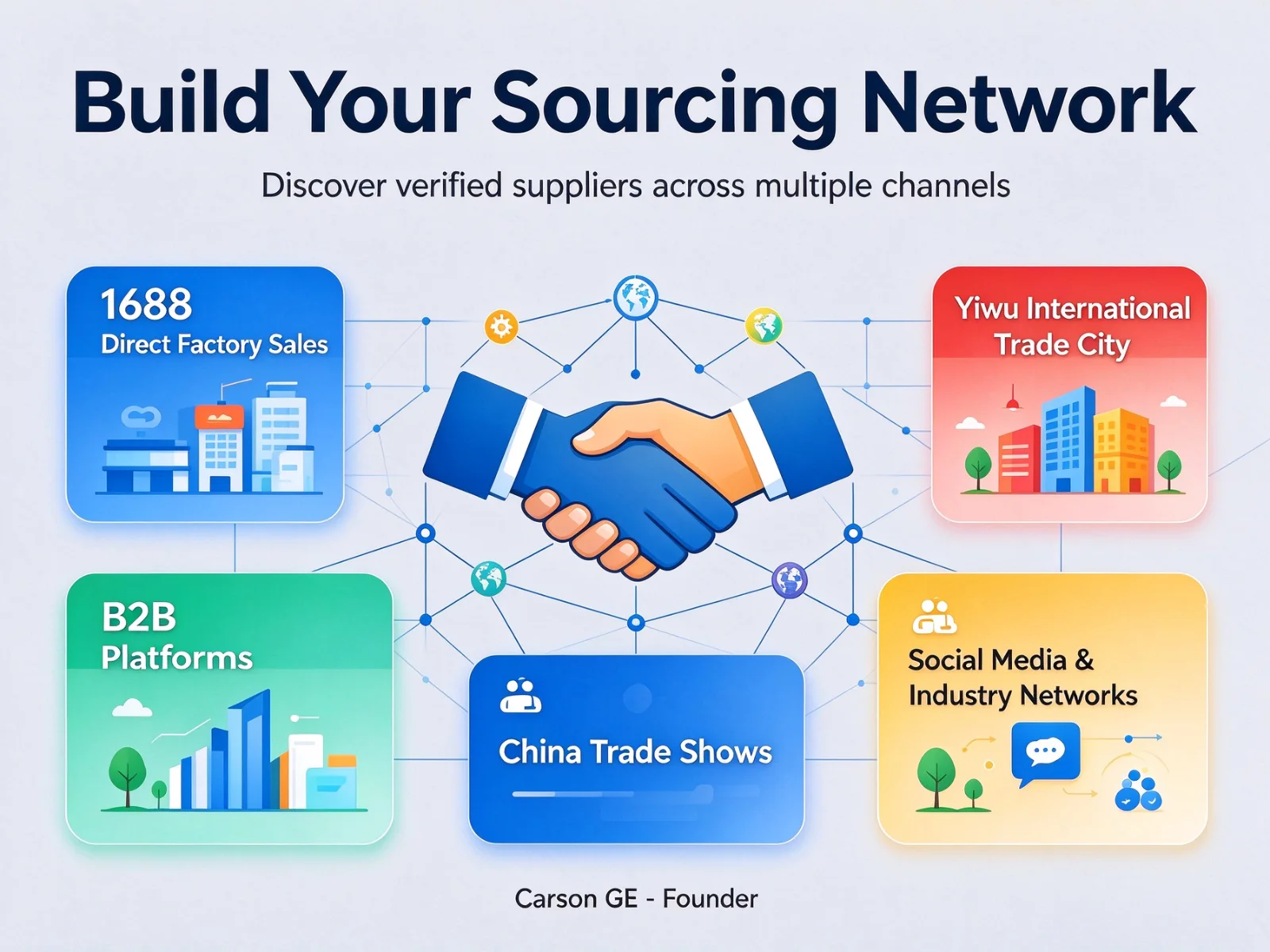
‑ Use 1688‑platform for trial‑batches; domestic Chinese MOQs are often lower than export‑oriented factory MOQs.
‑ Consolidate multiple‑SKUs within same shipment to divide fixed‑freight and minimum‑order‑handling‑expenses.
‑ Complete FBA‑prep work inside‑China: labelling, poly‑bagging before‑export‑shipping, avoid expensive US‑3PL‑prep‑fees.
‑ Always run AQL 2.5 QC‑inspection (~ USD 120 per man‑day) for every trial‑batch, catch defects before inventory reaches end‑customers.
Related Sourcing Guides
‑ How to Order Samples from China
‑ 1688.com Shopping Agent in English
‑ Polasourcing China FBA Prep Service in China
‑ Sourcing Agent for TikTok Shop Sellers
‑ Polasourcing China Sourcing Agent for Amazon FBA (USA)
‑ Sourcing FAQ