 PolasourcingGet Quote
Key Takeaways
‑ Many markers are made by a chain of workshops, not one factory. One does injection molding, another sprays the text and logos onto the barrels, another assembles and packs.
‑ Some factories do not sell to outside buyers at all. They only work for fixed customers, so you will not get an offer even if you find them.
‑ A big factory does not mean a big catalog. Even a large plant usually runs only 20–30 styles at a time.
‑ Output is high. A mid‑sized factory makes about 200,000–300,000 markers a day; a larger one 500,000–600,000.
‑ Know who you are talking to. Ask which steps are done in‑house before you compare prices or agree on quality.
What I saw in Fenshui
I recently spent time in Fenshui, the town near Hangzhou where a large share of China’s pens and markers are made, visiting marker factories with samples from a client. From the outside, every factory looks like a marker factory. Once you walk in and ask questions, you find they work in very different ways.
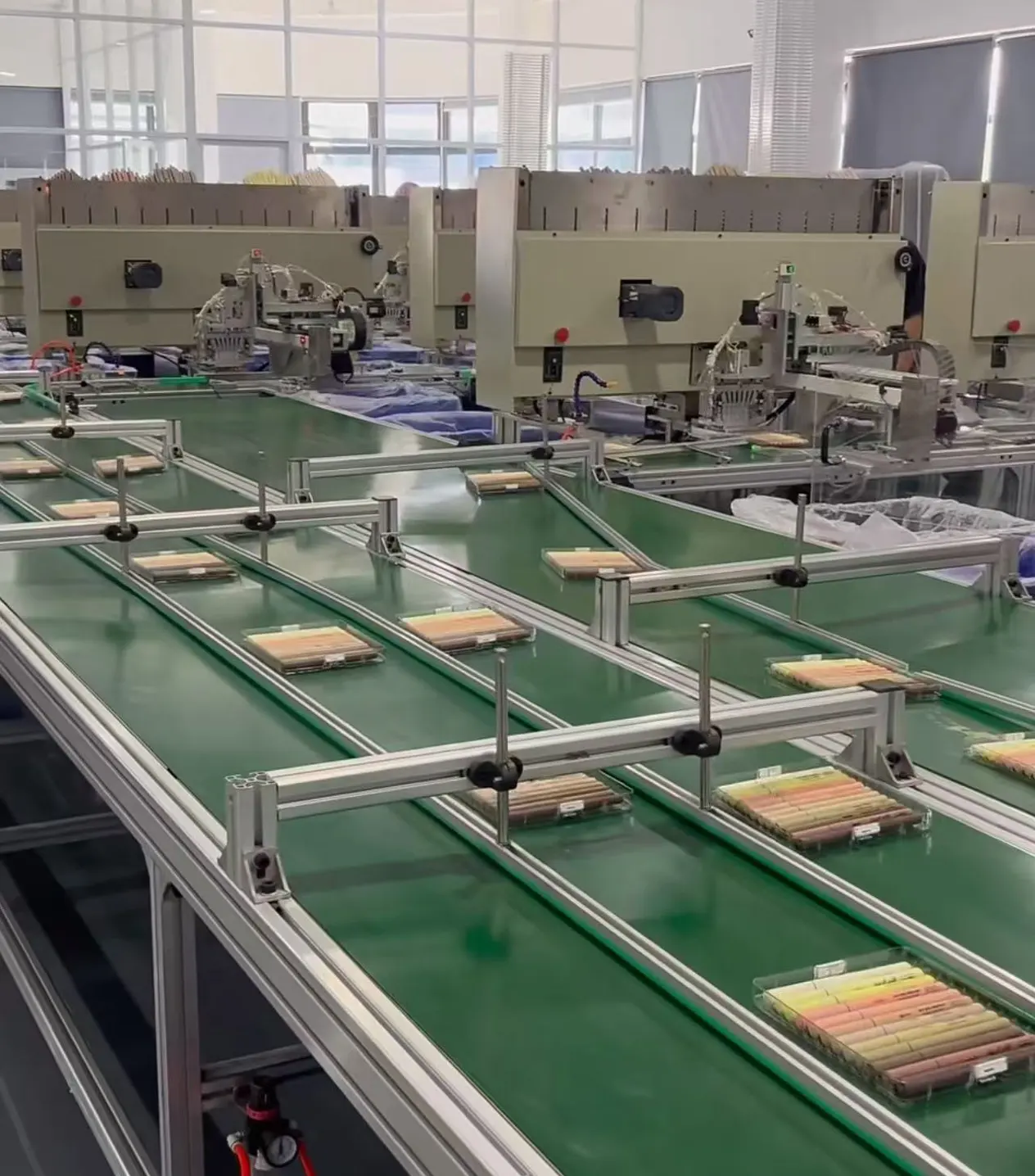
Five kinds of marker factories you will meet
This is how I would sort the factories I met:
| Type | What they do | What it means for you |
|---|---|---|
| Single‑process workshops | Only one step, such as injection molding the barrels or spraying text onto them. | They supply other factories. You usually cannot buy finished markers from them. |
| Assembly and packing factories | Collect parts from several workshops, then fill, assemble and pack the finished markers. | Often the ones selling to buyers. Quality depends on suppliers they do not control. |
| Packing agents | Handle several parts of the chain for other factories, often the final assembly and packaging. | Can be flexible on packaging, but ask who actually makes the marker. |
| One‑stop factories | Molding, text spraying, assembly and packing all in one place. | Easiest to hold responsible for quality and lead time. |
| Closed factories | Produce only for fixed customers and do not take outside orders. | No purchasing opportunity, even if you find their address. |
Split production is not a bad thing. It is how the town keeps costs low. But it changes who is responsible when something goes wrong.
Big factory, small catalog
One thing surprised me. Some factories have large buildings but only a few styles. Even a big factory can usually guarantee production of only 20–30 styles at a time.
The reason is volume. A mid‑sized factory makes about 200,000–300,000 markers a day, and a larger one can reach 500,000–600,000 a day. Lines are set up to run the same styles for long periods, not to switch between hundreds of models.
For buyers, this means:
- Do not judge a factory by its catalog size. A short list with high daily output often means stable quality on those styles.
- Stock styles are your fastest, cheapest option. Small orders of a style the line already runs are much easier to fit in.
- New styles mean new molds. A factory will only add a style for you if the order is big enough to pay for it.
Questions I ask every marker factory
- Which steps do you do yourselves? Molding, spraying text onto the barrels, ink filling, assembly, packing. Ask to see the machines for each.
- Who makes the parts you buy in? If the barrel or ink comes from outside, ask whether the same supplier will be used for your whole order.
- Is this a stock style? Ask for the current colours, ink and packaging, and what MOQ applies if you change them.
- What can you customise? Barrel colour, printing, logo and packaging are usually easy. A new shape needs a new mold.
- How do you check quality? Ask what they test before packing, and how many markers per batch.
- When is your line free? With high output, lead time depends on the queue, not the quantity.
What to check on markers before shipment
- Ink flow and colour: write with a sample from several boxes and compare colours with the approved sample.
- Leaks and dry‑out: check caps seal tightly and tips do not dry within a few minutes uncapped.
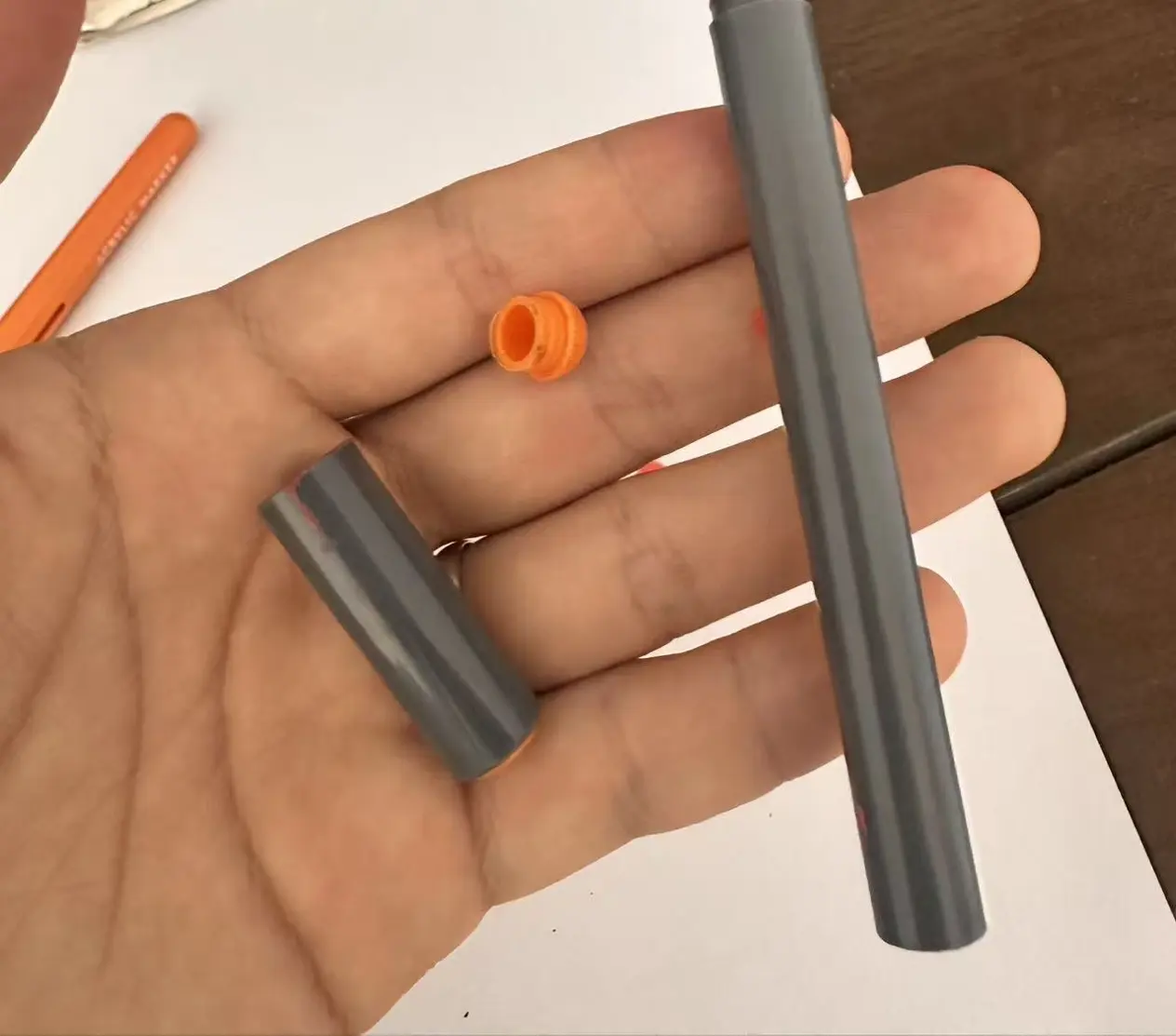
- Fit: caps click on firmly, plugs and tips do not fall out.
- Printing: logos and text are sharp, straight and do not rub off.
- Packing: the right colour count in every box, and cartons strong enough for the trip.
- Compliance: art markers and children’s stationery often need tests for your market, such as ASTM D‑4236 labelling in the US or EN 71 for toys in the EU. Ask early, because testing takes time.
How I approach marker sourcing for clients
I start with the factory that does the most steps in‑house, and I visit if I can. If the best price comes from an assembly factory, I find out where the key parts come from and check them at inspection. For a new design, I compare the mold cost with a close stock style first. Very often the stock style, with your colours and logo, is the smarter choice.
If you want to see how we handle molds, read what I learned hunting for old marker molds and our guide to private molds vs. logo printing.
Looking for a marker factory?
Send me a sample photo, your quantity and your market. I will check with factories here and tell you honestly which ones fit, and what it will cost.