PolasourcingGet Quote
By Carson GE — Founder
Alibaba is a useful place to start when you are sourcing products from China. It gives international buyers a familiar way to search products, compare supplier profiles and begin conversations. But one marketplace cannot show every factory, every product category or every way of working with a supplier.
If you are comparing prices, looking for a particular manufacturing capability, or trying to build a second source for an existing product, widening your search can help. The key is to treat each website or channel as a way to find leads—not as proof that a supplier is the right fit.
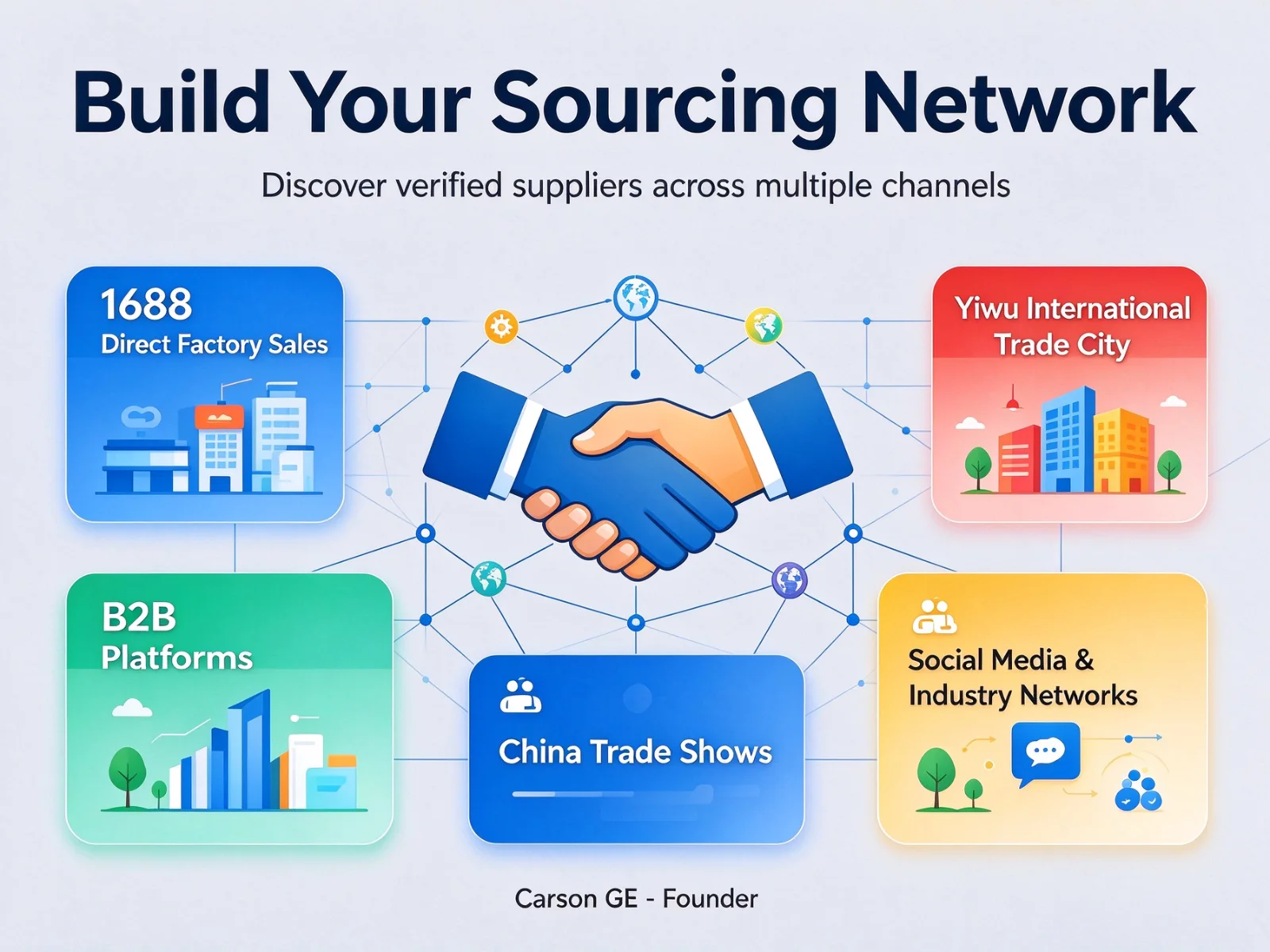
Here are seven practical Alibaba alternatives and sourcing channels, what each is good for, and what to check before moving forward.
1. 1688: Search the domestic wholesale market
1688 is part of Alibaba Group and is designed mainly for China’s domestic wholesale market. Buyers often use it to explore product ranges, compare local-market listings and discover suppliers that are less visible on export-focused marketplaces.
Best for: Product research, domestic-market price comparisons and finding a wider range of Chinese wholesalers or manufacturers.
Watch for: Listings and communication are primarily in Chinese, and payment, shipping and after-sales processes may be designed for domestic transactions. A low listing price may not include export packaging, inspection, inland transport or international freight. Confirm the exact product specification and full delivered cost before comparing it with an export quote.
2. Made-in-China.com: Explore export-oriented manufacturers
Made-in-China.com is an international B2B directory covering a broad range of categories, including industrial goods, components, machinery and consumer products. It can be a useful second directory when you want to compare suppliers that present information for overseas buyers.
Best for: Industrial sourcing, components and building an initial list of export-facing suppliers.
Watch for: A profile is a starting point, not an independent factory audit. Ask who will issue the contract and invoice, where production takes place, which processes are handled in-house, and what evidence supports the supplier’s claims.
3. Global Sources: Search by category and meet suppliers at trade shows
Global Sources combines online supplier discovery with trade shows, including events that focus on electronics and lifestyle products. Meeting a supplier in person can make it easier to discuss samples, product details and customization requirements.
Best for: Buyers who want to compare export-ready suppliers online and may also attend a relevant trade show.
Watch for: An attractive booth or polished profile does not settle questions about production capacity, subcontracting, quality controls or order terms. Keep the same product brief and questions for every supplier so the comparisons stay useful.
4. Trade fairs: Speak with suppliers face to face
Trade fairs such as the Canton Fair bring many suppliers together in one place. A focused visit can help you see product ranges, compare materials and ask questions directly. It can also reveal which suppliers understand your product and target market.
Best for: Buyers with a clear category who can travel, or businesses planning a serious supplier search.
Watch for: A conversation at a booth is not a completed due-diligence process. Collect the company’s full legal name, contact details and product information. After the fair, request a written quotation and verify that the entity you evaluated is the entity that will receive payment and fulfill the order.
5. Yiwu International Trade Market: Source small commodities in person
Yiwu is known for a large wholesale market with many small-commodity categories, including accessories, gifts, household items, seasonal goods and general merchandise. Buyers can review products across multiple stalls and discuss assortments or sample selections on site.
Best for: Buyers sourcing varied small commodities, mixed categories or products where seeing the item in person helps narrow the choice.
Watch for: A market stall may be a trading business rather than the factory. Ask who manufactures the product, whether the same specification can be repeated, how packaging and labeling are handled, and where quality checks take place. Confirm sample and bulk-order terms in writing.
6. Search directly for manufacturers
Google, company websites, industry directories, professional networks and regional manufacturing-cluster searches can uncover suppliers that do not actively promote themselves on a major marketplace. Try specific searches that combine the product, material, process and location—for example, “stainless steel bottle manufacturer Zhejiang” or “custom injection molding factory Ningbo.”
Best for: Buyers with a defined product, technical requirements or a need to reach a particular production cluster.
Watch for: Search results can include brokers, resellers and outdated company pages. Cross-check the company name, address, product range and contact information. Ask for a video call or a visit where appropriate, and verify the manufacturing location before treating a company as a factory.
7. Work with a China-based sourcing partner
A local sourcing partner can help search across several channels, communicate in Chinese, compare quotations, coordinate samples and follow up with suppliers on the ground. This can be especially useful when you are combining products from multiple suppliers or need someone to check details in person.
Best for: Buyers who need hands-on coordination, have limited time in China, or want support across sourcing, sampling, quality follow-up and shipping.
Watch for: Agree on the service scope, fee structure, who owns the supplier relationship, how supplier payments are handled and what reporting you will receive. Ask for a written quotation and clear deliverables before work begins. A sourcing partner should be transparent about any commissions or other compensation connected to suppliers.
How to choose the right channel
You do not need to use every channel for every product. Match the search method to the buying decision you need to make:
- For early product research, compare listings on more than one marketplace and note which specifications are actually the same.
- For industrial products or components, include export-oriented directories and direct manufacturer searches.
- For small commodities and mixed assortments, consider visiting Yiwu or using a local partner to compare options in person.
- For a custom product, use trade fairs, direct factory outreach or a sourcing partner to discuss production capability and development details.
- For a repeat order, search for a qualified backup supplier before a shortage or quality issue forces a rushed change.
A practical supplier-checking checklist
Before you pay a deposit or release production, make sure you can answer these questions:
- Who is the legal seller? Match the company name on the quotation, contract, invoice and receiving bank account. Clarify any difference before sending money.
- Who makes the product? Ask whether production is in-house or subcontracted, and which steps are handled by each facility.
- What exactly are you buying? Put materials, dimensions, functions, tolerances, packaging, labels and destination-market requirements into a written specification.
- Have you approved a sample? Review a representative sample against the written specification and record any changes before mass production.
- How will quality be checked? Agree on inspection timing, acceptance criteria, defect handling and the records you expect to receive.
- What is included in the price? Separate product cost, tooling, packaging, inspection, inland delivery and international shipping so you can compare like with like.
- What happens if the plan changes? Confirm lead times, payment milestones, cancellation terms and the process for resolving a quality or delivery dispute.
A website badge, business license or video call can each provide useful information, but none alone proves that an order is risk-free. Build your decision from multiple checks, keep important commitments in writing, and begin with a manageable order when you are still learning how a supplier works.
The takeaway
Alibaba is one useful route into China sourcing, but it is not the only one. 1688, international B2B directories, trade fairs, Yiwu Market, direct research and a local sourcing partner each solve different parts of the supplier-search process.
The strongest approach is usually to shortlist through the channel that fits your product, compare suppliers against one clear specification, and verify the company and order details before committing. More search results are only helpful when they lead to better-checked choices.
If you are comparing suppliers in China, Carson GE — Founder of Polasourcing — can help you review product requirements, coordinate quotations and samples, and plan quality checks and shipping from Yiwu.